
Let me be upfront with you: Venice is overwhelming.
The crowds, the canals, the churches all competing for your attention – it’s a lot. So when someone asks me which museums are actually worth your time, the Correr Museum is one I genuinely push.
Not because it’s the most famous (the Doge’s Palace takes that crown), but because it’s the one that quietly explains why Venice became Venice – and most visitors walk right past the entrance.
Here’s everything you need to know.
What Is the Correr Museum?
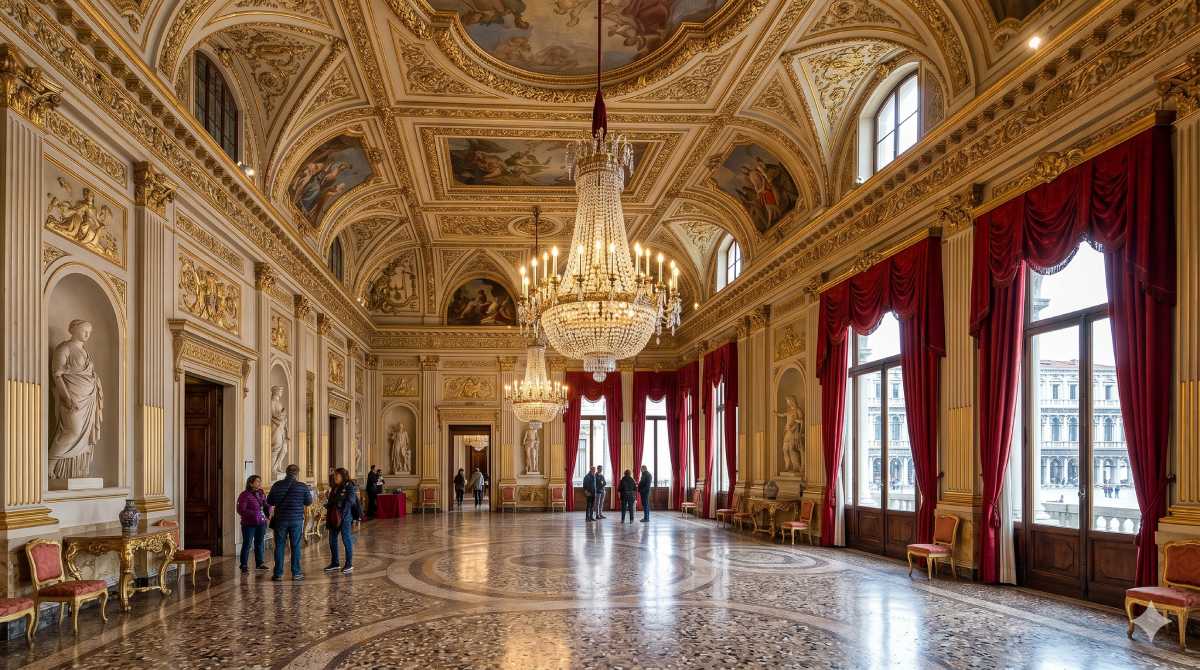
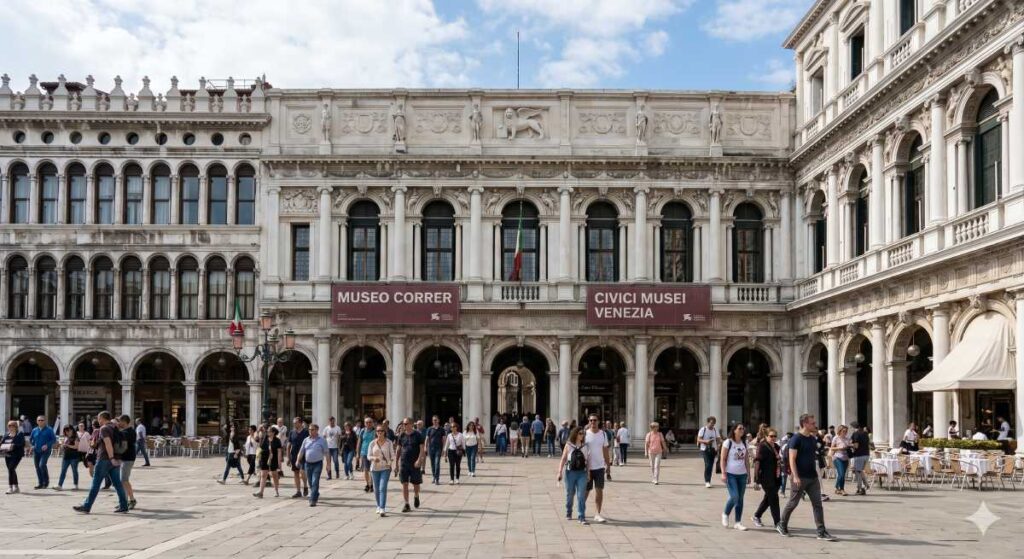
The Correr Museum – officially the Museo Correr – is one of the great civic museums of Venice. It sits right on Piazza San Marco, running along the south side of the square in the upper floors of the Procuratie Nuove and the Napoleonic Wing. So if you’ve ever stood in St Mark’s Square and looked at those elegant arcaded buildings opposite the Basilica, you’ve basically been staring at the museum’s exterior without realising it.
The whole thing started with a Venetian nobleman named Teodoro Correr. He spent his life obsessively collecting art, historical objects, and Venetian memorabilia, and when he died in 1830, he left everything to the city. That bequest became the seed of what you see today – a museum covering the full arc of Venetian history and civilisation, from the Republic’s origins right through to the unification of Italy in the 19th century.
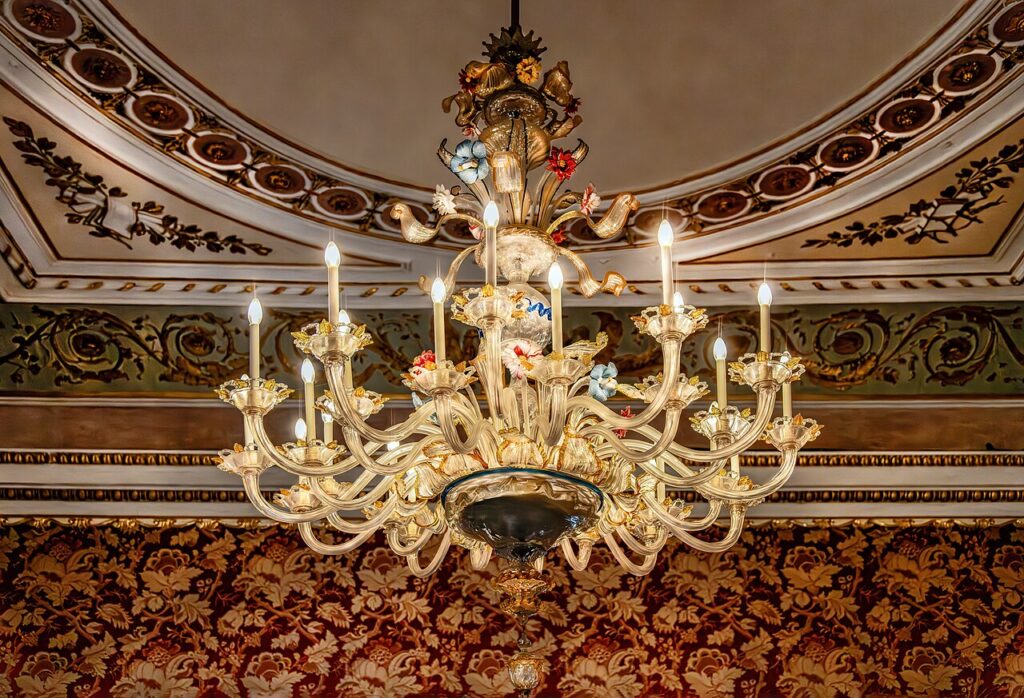
The building itself has a fascinating backstory. The Napoleonic Wing was built on Napoleon’s orders when he was king of the Kingdom of Italy, designed as a residence for his court. He never actually lived there (the construction wasn’t finished until after his death), but the Habsburgs moved in instead, and the rooms still carry that early 19th-century neoclassical grandeur. You can walk through the chambers where Emperor Franz Joseph and his wife Elisabeth – better known as Sissi – actually stayed. There’s a throne room, a ballroom, private studies and boudoirs, all decorated with an opulence that tells you exactly how the Austrians felt about their Venetian foothold.
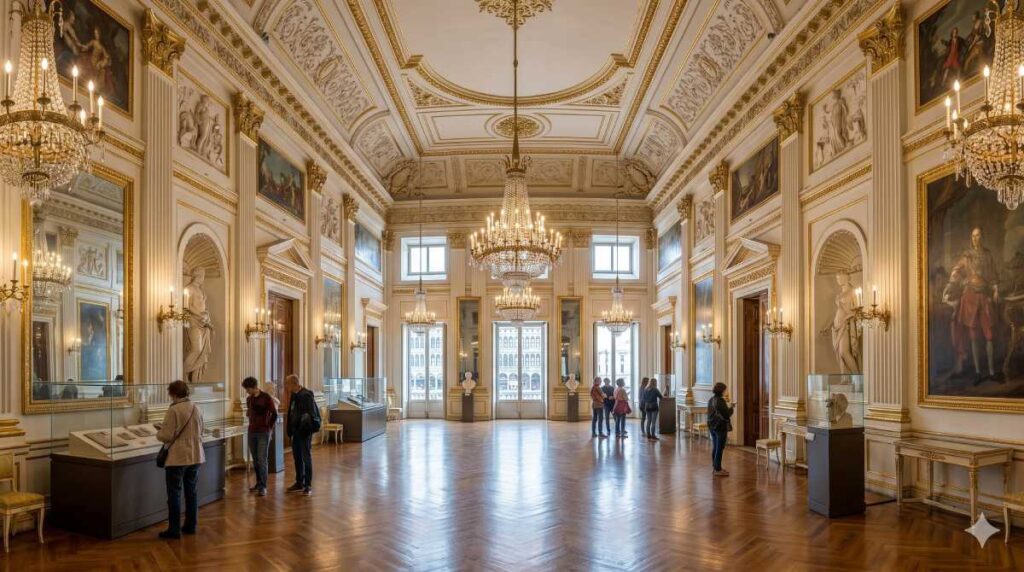
Beyond the royal apartments, the museum covers Venetian history proper – maritime trade, the institutions of the Republic, the famous Bucintoro (the ceremonial barge used by the Doge for the ritual “marriage with the sea”), navigation instruments, arts and crafts, and local festivals. On the second floor, a picture gallery of 140 works by Venetian masters anchors the artistic side of things. And there’s a dedicated section on Antonio Canova, the great neoclassical sculptor who was born near Venice and died in the city in 1822.
Where Is It?
Piazza San Marco 52, Venice.
You can’t miss the square – the bigger question is always finding the entrance, which in Venice’s tightly-packed streets often requires paying attention.
The main entrance to the Correr is at the far end of Piazza San Marco from the Basilica, on the ground floor of the Ala Napoleonica (the Napoleonic Wing). You go up a grand staircase and suddenly you’re in a different century. The museum is physically connected to the National Archaeological Museum and the Monumental Rooms of the Marciana Library, meaning once you’re in, you can walk between all three without going back outside.
Which Ticket Gets You In?
This is where Venice’s ticketing landscape gets a bit tangled, so let me break it down clearly.
First: the Normal Basilica Entrance won’t help you here. Tickets for St Mark’s Basilica are entirely separate and don’t cover the Correr Museum. The Basilica has its own ticketing system. So if someone tells you the Basilica ticket gets you into the museum — that’s wrong.
The St Mark’s Square Museums ticket (also called the St Mark’s Pass or Musei di Piazza San Marco) is your standard option. This is a single combined ticket covering four venues: the Doge’s Palace, the Correr Museum, the National Archaeological Museum, and the Monumental Rooms of the Marciana Library.
One important nuance: the Doge’s Palace portion of this ticket is only valid for the specific date you select at purchase. The other three museums – Correr included – are flexible within the three-month window. So plan your Doge’s Palace visit first and book the date, then use the rest whenever.
The Venice Museum Pass is the bigger option. It’s valid for six months from purchase, allows one entry to each museum, and doesn’t require reservations. If you’re planning to spend a few days museum-hopping across Venice, the maths tips in favour of this pass pretty quickly.
The bottom line: for most visitors spending a day or two in Venice and hitting the main Piazza San Marco sights, the St Mark’s Square Museums ticket makes the most sense. If Venice is the main event of your trip and you want to go deep on the city’s museums, get the Museum Pass.
Is It Worth Going?
Yes. And I’ll tell you exactly why.
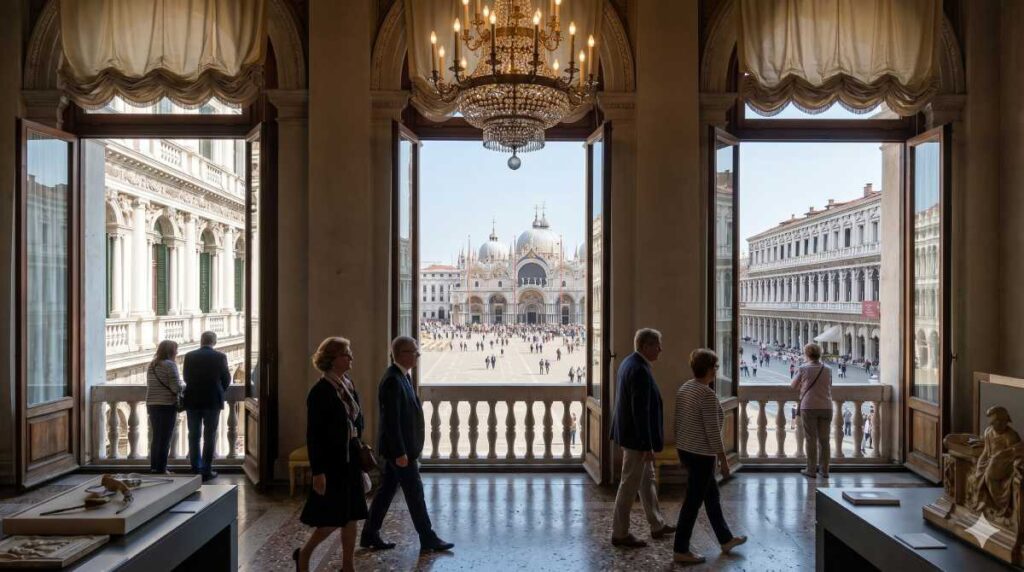
Most people who visit Venice spend their time either queuing for the Doge’s Palace or fighting crowds at the Basilica. The Correr Museum gets a fraction of that foot traffic, which means you can actually slow down and look at things. The neoclassical rooms of the Napoleonic Wing are genuinely beautiful — there’s a ballroom here that would stop you dead. The view down into Piazza San Marco from the upper gallery windows, with the Basilica façade right there across the square, is one of those moments that stays with you.
For history lovers, the museum is almost indispensable. You leave with a real understanding of how the Serenissima – the “Most Serene Republic” – actually worked as a political and maritime machine. The navigation instruments and Bucintoro materials are fascinating. The picture gallery has serious Venetian Gothic and Renaissance paintings, including works by Giovanni Bellini, Vittore Carpaccio, and Antonello da Messina.
The Empress Sissi rooms are a slightly strange bonus – Habsburg imperial décor inside what was meant to be Napoleon’s palace, which is itself built on the ruins of a demolished church. Venice in a nutshell, really.
The one thing to manage your expectations on: Room III (the Canovian collection) has been closed for maintenance since late 2025. If the Canova sculptures are the main draw for you, check the official website before you go to confirm it’s reopened.
Opening Hours
The museum is open daily. Hours vary by season:
April through October (high season): 10:00 to 18:00, with last admission at 17:00.
November through March (low season): 10:00 to 17:00, with last admission at 16:00.
The museum runs extended evening hours on Fridays and Saturdays: open until 23:00, with last admission at 22:00. These late openings apply to both the Correr Museum and the Doge’s Palace. If you want the quieter, atmospheric experience, an evening visit in summer is genuinely worth planning for.
The ticket office closes one hour before the museum closes. Note that the first Sunday of each month offers free admission to the National Archaeological Museum and Marciana Library – but not the Correr Museum itself, which maintains its regular pricing on those days.
How Do I Get There?
The Correr Museum is in the dead centre of Venice, which means everything and nothing when it comes to transport. There are no taxis or buses on Venice’s main island – you’re walking and taking water buses (vaporetti).
By vaporetto (water bus): The closest stops are San Marco Vallaresso (Lines 1, 2, and N) and San Marco Giardinetti (Line 2). From Piazzale Roma (where coaches and the People Mover from the car parks arrive), take Line 1 or 2. From Santa Lucia railway station, Line 1 (slow but scenic, stops everywhere) or Line 2 (faster) will get you to San Marco.
By foot: Once you’re off the vaporetto, it’s a short walk into the square. From the San Zaccaria stop, it’s about 5 to 10 minutes.
From Marco Polo Airport: You can take the Alilaguna water bus (the orange line heads to San Marco), which takes around 75 minutes. A private water taxi is faster at around 30 to 40 minutes but significantly more expensive. Most people who want the economy option take the shuttle bus to Piazzale Roma and then the vaporetto from there.
How Much Time Do You Need to Get There?
From the main arrival points:
From Santa Lucia train station to the museum: about 30 to 40 minutes by vaporetto (Line 1 is the more common choice and takes around 35 to 40 minutes, Line 2 is faster at 20 to 25 minutes but has fewer stops). Add time for waiting at the stop.
From Piazzale Roma (coaches, cars): 30 to 40 minutes by Line 1, slightly less by Line 2.
From Marco Polo Airport: Allow 90 minutes to 2 hours via public water bus (Alilaguna). A water taxi cuts that to around 45 to 60 minutes depending on traffic on the lagoon.
For the museum itself: plan 2 hours for a casual visit covering the highlights. History and art enthusiasts will easily fill 3 to 4 hours, especially if they’re also visiting the Archaeological Museum and Marciana Library on the same ticket.
Tips for Visiting
Book online in advance. Queues at the Correr’s ticket desk can be long during peak season, particularly in summer and around major holidays.
Go early or go late. The museum opens at 10:00, and the first hour or two tends to be quieter before the day-tripper wave arrives. If you’re visiting in summer, the Friday and Saturday late openings are genuinely special — the light changes, the crowds thin out, and the whole place feels different.
Start at the top and work down. The neoclassical rooms and royal apartments are on the upper floors. Getting that context first — understanding the Habsburg history and the grandeur of the Napoleonic conception — makes the historical displays below feel more grounded.
Don’t rush through the picture gallery. It’s easy to treat it as a footnote after the historical rooms, but the collection is strong. Giovanni Bellini’s dead Christ supported by angels is one of the genuinely remarkable pictures in Venice.
Wear comfortable shoes. This is true of all of Venice, but the Correr involves a lot of marble floors and staircase-heavy navigation between sections. You will be on your feet.
Download the MUVE app. The museum’s audioguide is included in your ticket price and accessible through the app. It’s actually good — not the kind of dry narration you’re bracing for.
Combine it with the Doge’s Palace on the same day if possible. The two museums tell complementary stories about the Venetian Republic, and they’re on the same ticket. Walk from the Correr toward the Doge’s Palace in the morning, spend a couple of hours there, then cross back to the Correr in the afternoon when it’s slightly less frantic.
What’s Right Next Door?
You’re in Piazza San Marco, so the answer is: a lot.
St Mark’s Basilica is right there – the golden Byzantine church that dominates the square. Access to the main nave is free, though certain areas (the Treasury, the Pala d’Oro altarpiece, and the museum with the original bronze horses) have separate ticket prices. Timed entry slots are required in peak season, so book that separately.
The Doge’s Palace (Palazzo Ducale) is just steps away and connected to the museum by the same ticket. Gothic architecture, grand council chambers, works by Tintoretto and Veronese, and the infamous Bridge of Sighs crossing over to the old prisons. Allow at least two hours here.
The Campanile di San Marco – the tall bell tower in the centre of the square – offers the best panoramic views in Venice. You take a lift to the top. Worth the short queue.
Caffè Florian sits directly in the Procuratie Nuove – actually part of the same building as the Correr Museum. Founded in 1720, it’s the oldest café in continuous operation in Italy. It is absolutely a tourist experience and it is absolutely worth doing at least once. Go for an espresso standing at the bar if you want to keep costs down.
Gran Caffè Quadri is across the square in the Procuratie Vecchie, and has been open since 1775. It now holds a Michelin-starred restaurant upstairs alongside the historic café on the ground floor. Same ballpark on prices, same quality of atmosphere. Historically, the Austrians preferred Quadri while Venetian locals favoured Florian — that rivalry has been going on for centuries.
For proper food that won’t drain your wallet as fast, move away from the immediate square. A 10 to 15-minute walk in any direction will find you places where locals actually eat. The Dorsoduro and Castello neighbourhoods bordering San Marco both have good bacaro options – traditional Venetian wine bars serving cicchetti (small snacks, something like Venetian tapas). Sarde in saor (sweet-and-sour sardines), baccalà mantecato on bread, and a glass of ombra (small pour of wine) will cost you a few euros and taste exactly like Venice is supposed to taste.
For a hotel within walking distance of the museum: Baglioni Hotel Luna is a five-star option steps from the square with lagoon views. Albergo Cavalletto & Doge Orseolo is one of Venice’s oldest hotels, sitting just behind St Mark’s Square. More affordable options appear as soon as you move into Dorsoduro or Castello, where you can still reach the museum on foot in under 15 minutes.
The Correr Museum won’t hit you with the same instant drama as the Doge’s Palace or the Basilica. What it gives you instead is context – the actual substance behind the myth of Venice. Go in with a couple of hours and an open mind, and you’ll come out understanding why this city spent a thousand years being one of the most remarkable places on earth.
Where is the Correr Museum located?
Piazza San Marco 52, Venice. The entrance is at the far end of the square from the Basilica, in the Napoleonic Wing (Ala Napoleonica). Look for the grand staircase just off the arcade.
What are the opening hours?
April to October: 10:00–18:00, last entry at 17:00. November to March: 10:00–17:00, last entry at 16:00. In summer 2026, Friday and Saturday evenings are extended to 23:00 (last entry 22:00).
Do I need to book tickets in advance?
You don’t have to, but it’s strongly recommended in peak season. Booking online saves you queue time at the door — and potentially €5 on the adult price if you book more than a month ahead.
How long does a visit take?
Around 2 hours for a casual visit. History and art enthusiasts will comfortably fill 3 to 4 hours, especially if they continue through the Archaeological Museum and Marciana Library on the same ticket.
Is the Correr Museum included in the Basilica ticket?
No. St Mark’s Basilica has a completely separate ticketing system. To enter the Correr, you need either the St Mark’s Square Museums ticket or the Venice Museum Pass.
What is there to see inside?
Three main areas: the neoclassical royal apartments (including Empress Sissi’s rooms), the historical rooms covering Venetian maritime history and the Republic’s institutions, and a picture gallery with 140 works by Venetian masters including Giovanni Bellini and Carpaccio. There’s also a dedicated section on sculptor Antonio Canova – though note that Room III of the Canova collection has been closed for maintenance since late 2025.
Is the Correr Museum suitable for children?
Yes, reasonably so. The grand rooms and historical objects – swords, navigation instruments, ceremonial armour – tend to hold kids’ attention better than a typical painting-heavy museum. Entry is free for children under 6.
How do I get to the Correr Museum?
By vaporetto: take Line 1 or 2 to San Marco Vallaresso, or Line 2 to San Marco Giardinetti. From Santa Lucia train station, Line 1 takes around 35–40 minutes. From Piazzale Roma, slightly less. From Marco Polo Airport, allow 90 minutes via the Alilaguna water bus.
Is the Correr Museum worth visiting if I’ve already been to the Doge’s Palace?
Yes – they cover different ground. The Doge’s Palace is about political power and governance; the Correr is about the broader civilisation and culture of Venice. If you’ve got the combined ticket anyway, the Correr is the more relaxed, less crowded experience of the two.