10 Unknown Facts – The Secrets of the St Mark’s Basilica
Venice is a labyrinth of water and stone, but its true spiritual epicenter anchors the eastern edge of Piazza San Marco. While millions of travelers stand beneath its cavernous arches every year, most only see a magnificent monument to medieval engineering. They look at the towering domes and glittering walls, missing the subtle anomalies, structural scars, and geopolitical deceptions that define its true narrative.
Behind the heavy, polished bronze doors lies a history forged in state-sponsored theft, ancient psychological warfare, and architectural illusions designed to project supreme cosmic power. To truly understand this monument, we have to look past the standard tour itineraries and dive into the deep, strange mysteries buried beneath its floorboards and gold leaf.
The very foundation of the basilica rests upon a daring 9th-century act of international corporate espionage and culinary deception. Before St. Mark became the patron saint of Venice, the city answered to St. Theodore. Desperate to elevate their global religious standing, two Venetian merchants, Rustico da Torcello and Buono da Malamocco, traveled to Alexandria, Egypt, to steal the skeletal remains of Mark the Evangelist.
The Halal Swindle: To get the holy relics past Islamic customs officials under the Abbasid Caliphate, the merchants devised an ingenious psychological trick.
The Repellent Layer: They placed the bones at the bottom of deep wicker baskets, then piled layers of fresh pork and cabbage leaves directly on top.
The Customs Reaction: According to contemporary accounts, when Egyptian inspectors approached the cargo, they cried out in revulsion (“Kanzir, kanzir!”—meaning pork) and refused to touch the baskets.
The Triumph: The ruse worked perfectly. The ship cleared port safely, and the stolen saint was brought to Venice to provide the spiritual legitimacy the young republic craved.
A Private Chapel Masquerading as a Public Cathedral
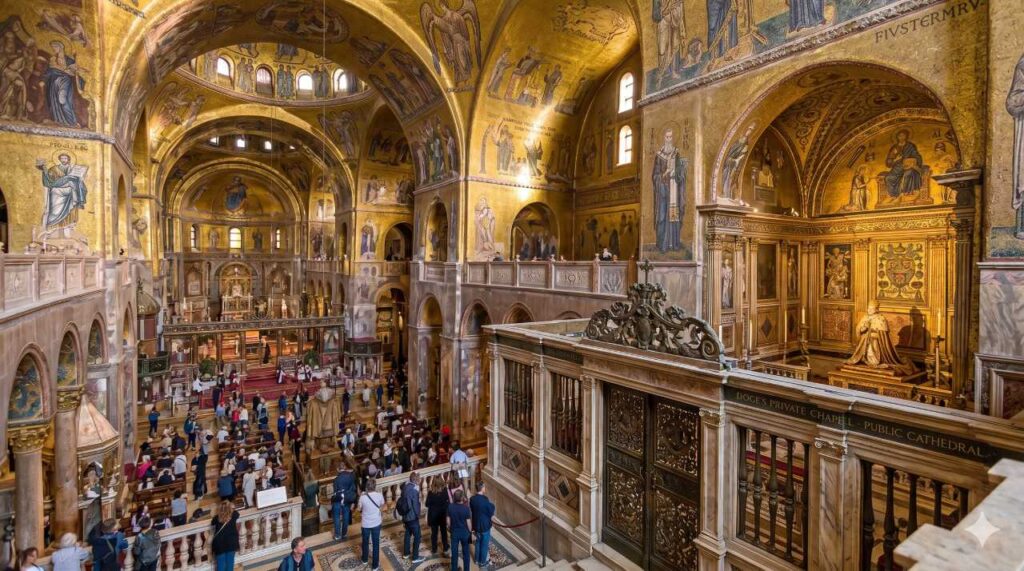
For the vast majority of its long history, St. Mark’s Basilica was not the official cathedral of Venice. To the modern visitor, it seems obvious that this sprawling masterpiece would be the seat of the local bishop, but the political reality of the Venetian Republic was deeply competitive and highly suspicious of church interference.
The Doge’s Private Sanctuary: From its initial construction until 1807, the basilica functioned legally as the private palace chapel of the Doge—the political ruler of Venice.
The Remote Bishop: The official cathedral of Venice during its golden age was actually San Pietro di Castello, located on an isolated island on the easternmost fringes of the city, intentionally kept far away from the heart of state power.
The Secular Takeover: The Doge controlled the building, appointed its administrators, and used its altars to launch military campaigns and display political dominance. It was only after the fall of the Republic, under the direct orders of Napoleon Bonaparte, that the seat of the Patriarch of Venice was formally relocated to San Marco.
The 85,000 Square Feet of Architectural Smoke and Mirrors
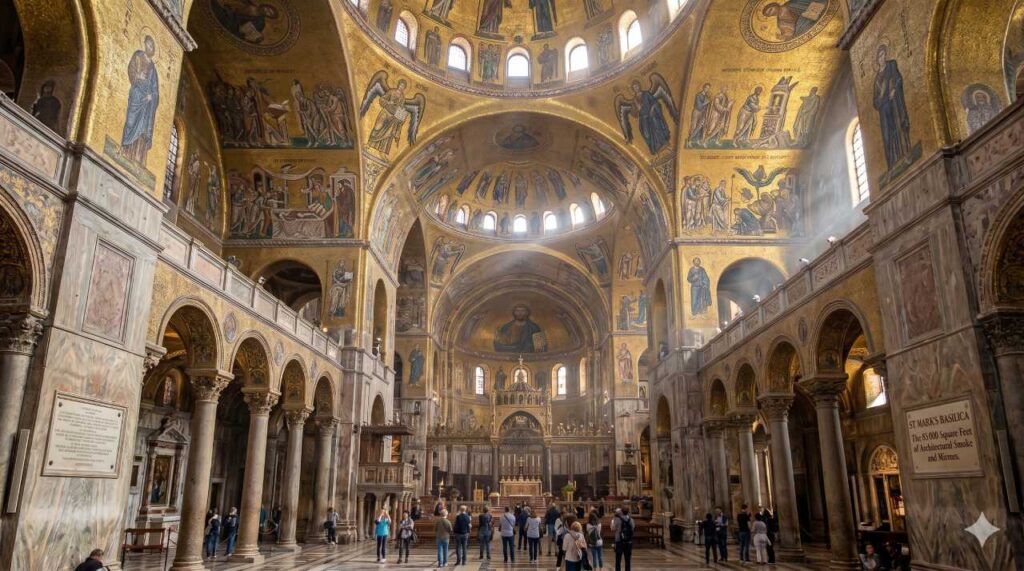
The nickname Chiesa d’Oro (the Church of Gold) is well-earned, but the luminous atmosphere within the upper vaults is not the result of simple gilding. The interior features more than 8,000 square meters of gold mosaics, engineered with an astonishing understanding of optics and light manipulation.
The Sandwich Technique: Each tiny tile, or tessera, was made by placing a delicate leaf of 24-karat gold between a layer of dark glass and a protective layer of clear blown glass.
The Calculated Angling: Architects did not set these tiles flush against the mortar. Instead, they purposely embedded them at slight, varying angles relative to the windows below.
The Shifting Glow: Because the surfaces are intentionally uneven, they act as thousands of tiny mirrors. As sunlight moves through the clerestory openings or candles flicker below, the walls do not merely reflect light—they appear to vibrate with an active, celestial glow.
The Rolling Sea of the Interior Pavement
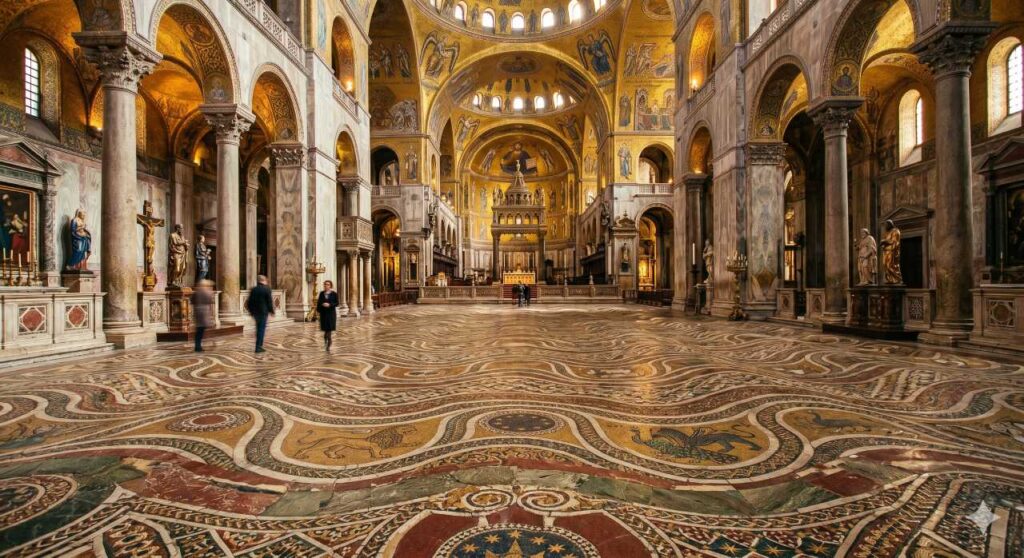
As you walk through the nave of the basilica, your feet will immediately notice that the floor behaves more like a stormy sea than a stable stone foundation. The intricate, geometric marble pavement swells, dips, and rolls in dramatic, unpredictable waves.
The Marshy Reality: This uneven typography is not an artistic choice meant to honor Venice’s relationship with the ocean. It is the physical manifestation of a structural battle against nature.
The Sinking Substructure: The entire church rests upon thousands of ancient wooden piles driven deep into the soft, muddy silt of the lagoon. Over a millennium, the immense weight of the brick domes and marble columns has compressed the subsoil unevenly.
The Aqua Alta Damage: Centuries of high-tide flooding (acqua alta) have repeatedly dissolved and washed away sections of the mortar beneath the floor, causing massive marble panels to warp, buckle, and sink.
Political Satire Hidden in Plain Sight Among the Animal Mosaics
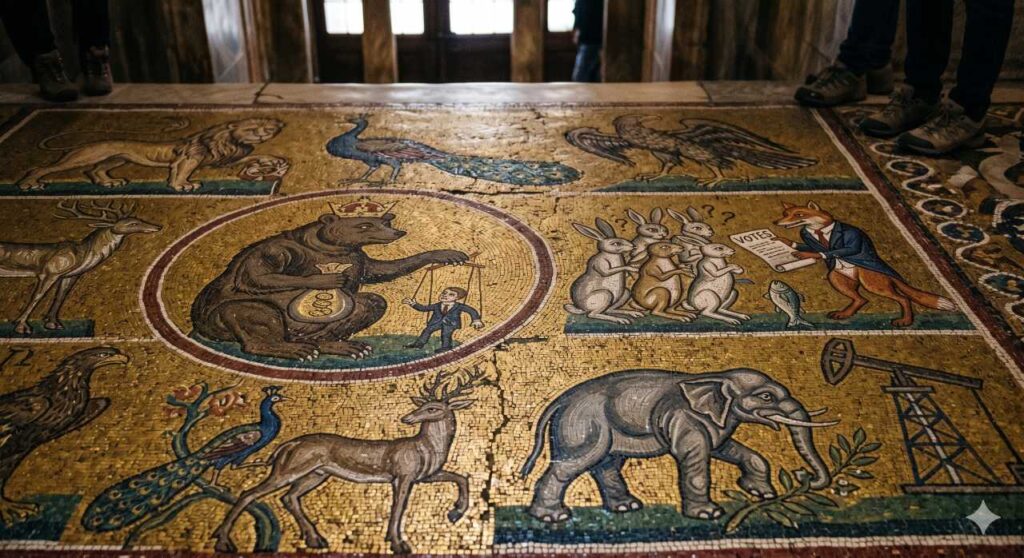
While the upper walls focus on grand biblical narratives, the marble floor mosaics feature a bizarre, medieval bestiary of animals. While some represent traditional Christian virtues, others are sharp, bitter examples of medieval political satire and local score-settling.
The Fox and the Rooster: One specific, highly unusual mosaic panel depicts two fat foxes carrying a bound, captive rooster on a pole.
The Allegory of Deception: In the symbolic language of the time, the foxes represented political cunning, foreign adversaries, or corrupt officials, while the rooster symbolized the alert, proud Venetian citizen.
The Civic Warning: The image served as a daily, literal reminder beneath the feet of politicians walking through the nave to remain forever vigilant against the deceptive treaties of neighboring European rivals.
The Miraculous Reappearance of the Forgotten Body
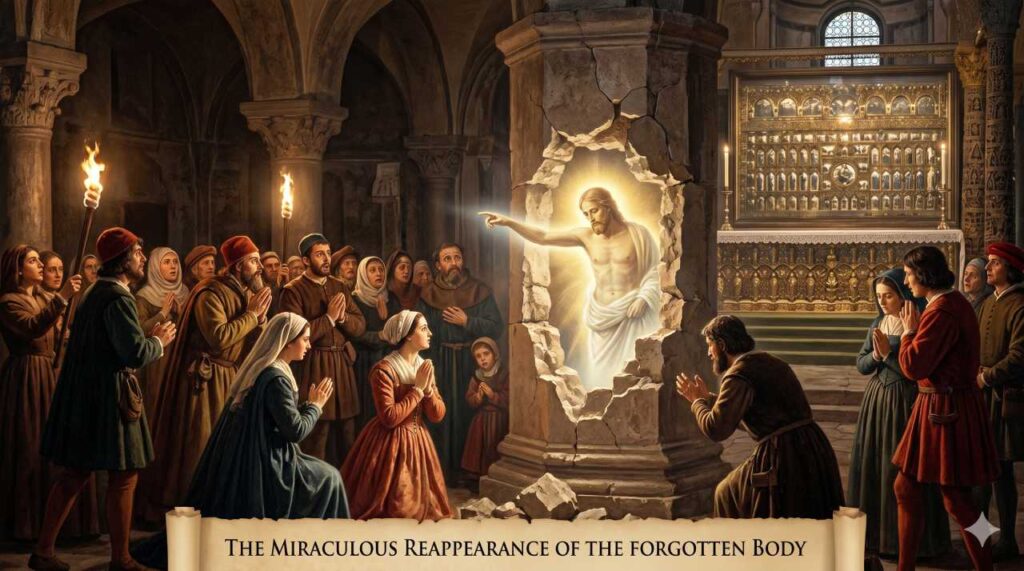
In 976 AD, a violent political rebellion erupted in Venice. Angry citizens set fire to the Doge’s Palace, and the flames quickly spread, tearing through the original structure of St. Mark’s Basilica. In the chaotic aftermath and subsequent rebuilding process, the secret location of St. Mark’s hidden relics was completely lost.
The Century of Panic: For over a century, the city lived in fear that its primary spiritual anchor had been vaporized in the fire or stolen during the confusion.
The Grand Rededication: In 1094, Doge Vitale Falier organized a massive, solemn fast and prayer service to beg for a sign to locate the missing saint.
The Cracking Pillar: According to church chronicles, during a particularly intense moment of the liturgy, a marble panel on a massive structural pillar in the right transept cracked open. A human arm slid out, revealing the missing sarcophagus hidden deep inside the masonry. The relics were recovered and eventually placed safely beneath the high altar.
The Triumphal Quadriga are Imperial Spoils of War
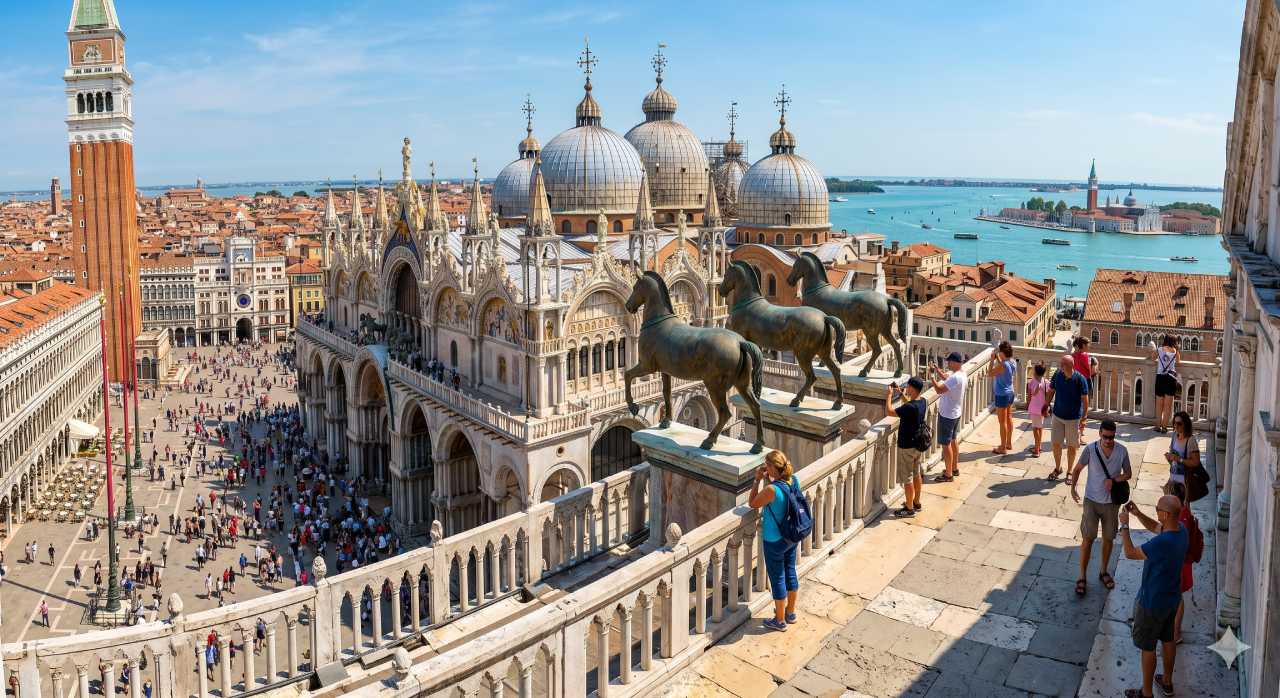
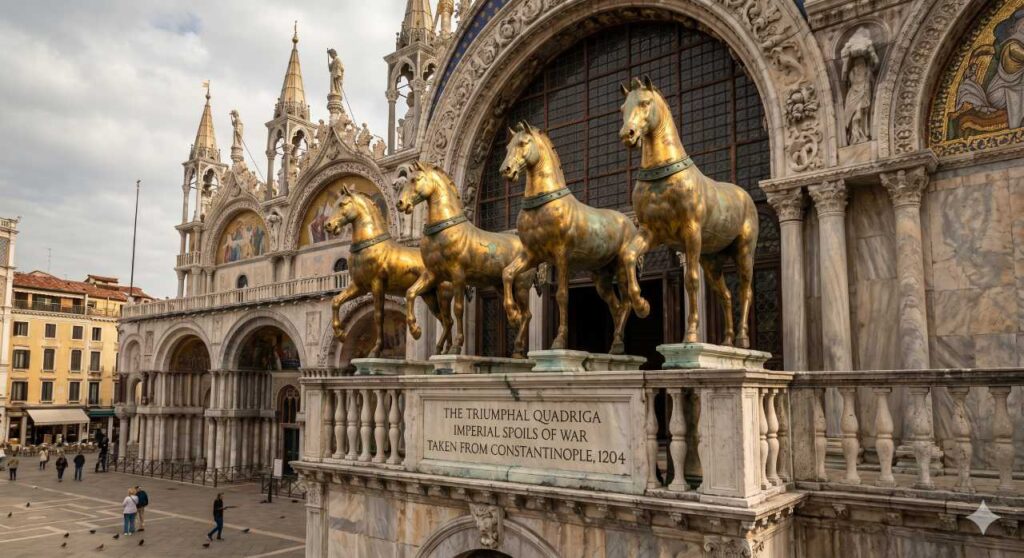
The four magnificent bronze horses that dominate the outdoor terrace overlooking the piazza are icons of Venice, but they are entirely foreign objects, stolen during one of the most controversial military operations in human history.
The Constantinopolitan Loot: Cast in antiquity (likely the 4th century BC), these statues originally stood in the Hippodrome of Constantinople, the capital of the Christian Byzantine Empire.
The Fourth Crusade Betrayal: In 1204, the Venetians, led by the blind, calculating Doge Enrico Dandolo, diverted the Fourth Crusade away from Jerusalem to sack and plunder Constantinople instead.
The Ultimate War Trophy: The horses were hacked down, shipped across the Mediterranean, and bolted to the facade of San Marco to visually announce that Venice had broken the back of the old empire.
The Double Theft: In 1797, Napoleon would repeat history by stealing the horses from Venice and taking them to Paris. They were eventually returned in 1815. Today, the outdoor statues are exact replicas; the fragile, weathered originals are kept indoors.
The Subterranean Flooding of the Silent Crypt
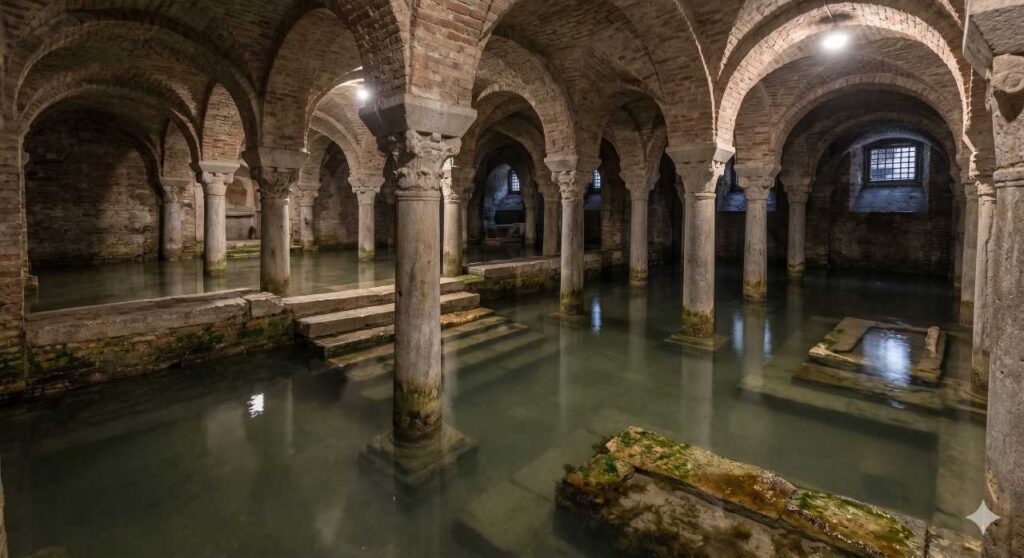
Directly beneath the high altar lies the oldest accessible portion of the complex: an atmospheric, low-ceilinged crypt supported by dozens of ancient, mismatched columns. For centuries, this dark chamber was the damp, secretive heart of Venetian mysticism.
The Sub-Sea Level Vulnerability: Because the crypt is situated below the average water level of the surrounding canals, it has spent much of its history acting as an indoor swimming pool during high tides.
The Relic Evacuation: The water table rose so high and so frequently that in 1811, church authorities grew terrified that St. Mark’s skeletal remains would decompose or wash away. The body was officially exhumed from the wet floor and reinterred in the main altar upstairs.
The Engineering Shield: Today, a specialized system of waterproof membranes, underwater drainage channels, and automated pumps works around the clock to keep this haunting subterranean space dry enough for occasional visitors.
The Priceless Pala d’Oro is Stuffed with Stolen Loot
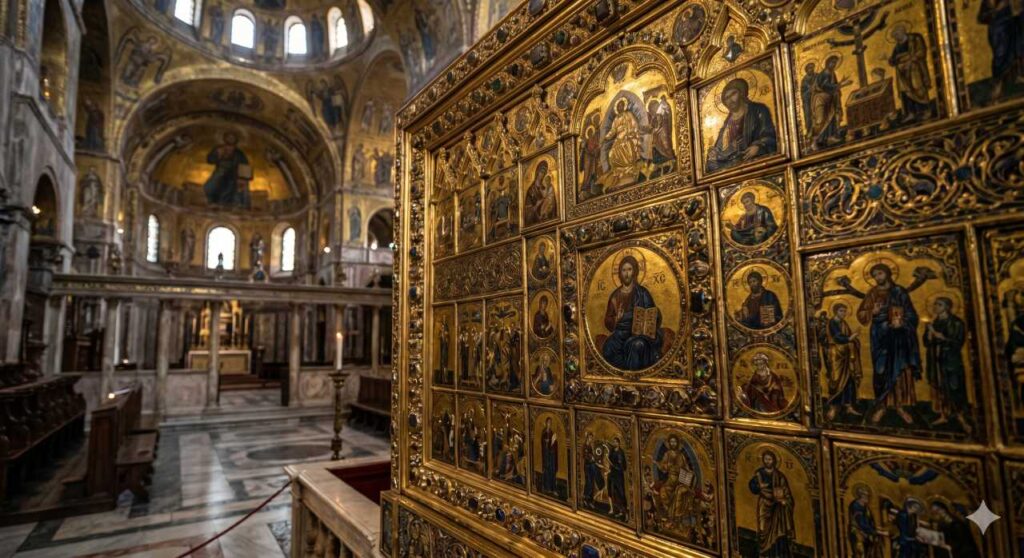
Positioned directly behind the high altar sits the Pala d’Oro, an altar screen widely considered one of the most complex and valuable pieces of gold craftsmanship on earth. It is a dense, blinding wall of metalwork, but its current grandeur is the result of continuous recycling and military plunder.
The Byzantine Shell: Originally commissioned from artisans in Constantinople in the 10th century, the screen was repeatedly expanded and modified by greedy Venetian rulers.
The Stolen Jewelry Inventory: Following the sack of Constantinople in 1204, Venetian goldsmiths stripped the jewels off imperial crowns, chalices, and reliquaries, mounting them directly onto the screen.
The Astronomical Gem Count: The final assembly contains nearly 250 separate enamel panels and is encrusted with 1,300 pearls, 400 garnets, 300 emeralds, 90 amethysts, 75 rubies, 4 sapphires, and 4 topazes, creating a physical ledger of Venice’s historic maritime conquests.
The Pilastri Acritani and the Art of Psychological Humiliation
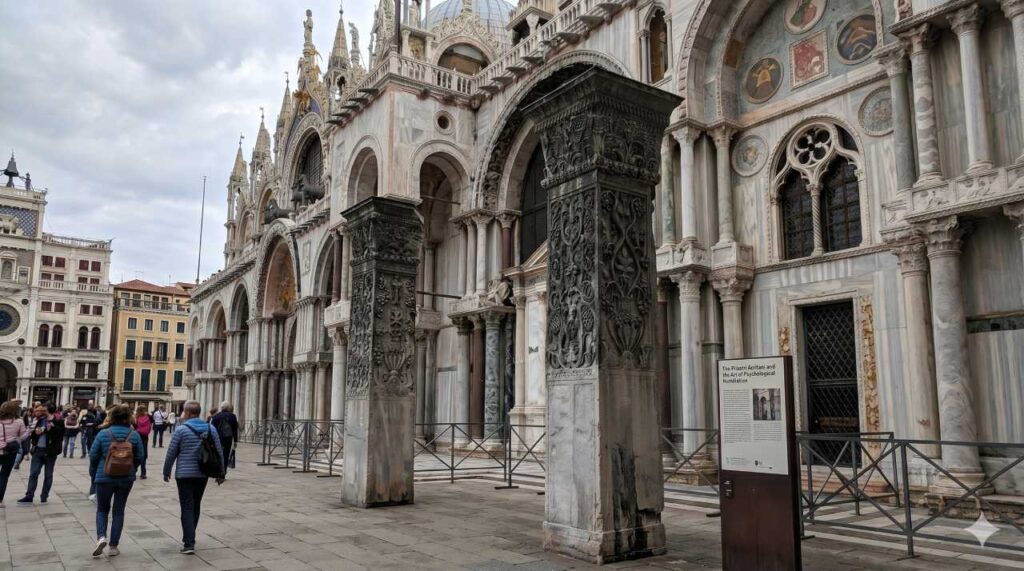
Flanking the south side of the basilica, near the entrance to the Doge’s Palace, stand two heavily carved, free-standing marble pillars known as the Pilastri Acritani. They appear purely decorative, but they were erected as a permanent expression of geopolitical spite and military revenge.
The Syrian War Spoils: In 1256, Venice engaged in a brutal commercial war with its arch-rival, Genoa. The conflict centered around control of the church of San Giovanni d’Acri in Acre (modern-day Israel).
The Total Demolition: After crushing the Genoese forces, the Venetians systematically dismantled the church stone by stone, loaded the heavy marble pillars onto their galleys, and sailed them back to the lagoon.
The Public Taunt: By erecting these pillars directly in the path of political traffic, the Venetian government ensured that any visiting Genoese diplomats or merchants had to walk past the literal ruins of their own defeated colony.
Navigating the Security Gates: Crucial Visitor Guide
To ensure you actually get past the intense security staff at the entrance porch and experience these secrets firsthand, you must understand the strict operational rules of the complex.
The Non-Negotiable Dress Code
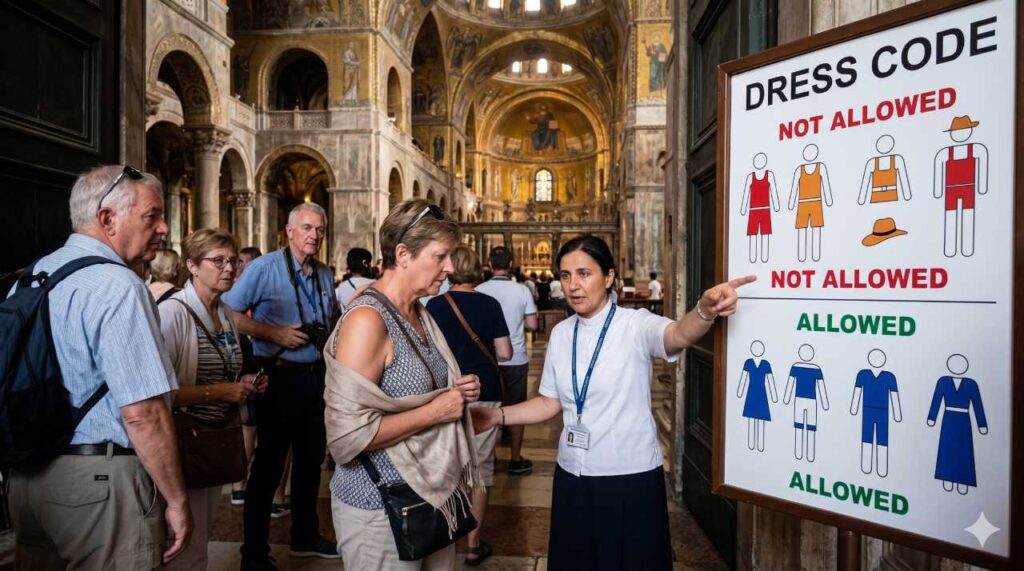
St. Mark’s Basilica is not a secular museum or an art gallery; it is an active, consecrated Roman Catholic sanctuary and the seat of the Patriarch of Venice. The guards at the front gates enforce a strict, conservative standard of clothing modesty. If you fail this check, you will be ejected from the queue instantly with zero exceptions made for hot weather or long wait times.
Before joining the line, make sure your outfit complies with these universal baselines:
Shoulder Coverage: All shoulders must be completely hidden. Tank tops, sleeveless shirts, spaghetti straps, and halter tops are entirely banned. If you are wearing a sleeveless dress or top, you must wrap an opaque scarf, pashmina, or jacket securely around your upper body before approaching the guards.
Knee Coverage: Shorts, skirts, and dresses must extend down past the kneecap. Short shorts, athletic cuts, and miniskirts will result in an immediate denial of entry.
Midriff and Cleavage: Crop tops, low-cut blouses, and clothing exposing the stomach or lower back are strictly forbidden.
Graphics and Headwear: Clothing with offensive text, explicit political slogans, or anti-religious imagery is banned. Men must remove all hats, caps, and beanies immediately upon entering the building, while women are permitted to keep traditional sun hats or religious headcoverings on.
To avoid being turned away at the door for non-clothing issues, prepare for these security mandates:
The Backpack Ban: For safety and space reasons, all large bags, daypacks, backpacks, and luggage are completely forbidden inside the church. Small personal purses and cross-body bags are permitted. You must drop your large bags at the free luggage deposit station at Ateneo San Basso (located in a side street near the basilica) before you line up.
No Interior Photography: Taking photos or videos inside the main nave is strictly forbidden to preserve the solemn atmosphere of prayer. Keep your phones and cameras stored away once you cross the threshold.
For an extensive preparation checklist covering waiting times, photo regulations, and accessibility questions, review the official St. Mark’s Basilica FAQ Page.
Selecting the Right Access Method
Depending on your travel style, budget, and interest in history, there are several distinct ways to access the interior of the cathedral. Choose the option that best aligns with your itinerary goals.
The Independent Track: Standard Entry Ticket
If you prefer to explore historical spaces at your own pace, free from a group itinerary, a basic entry ticket is your best option. This gives you full access to the main floor of the nave and allows you to admire the rolling marble floors and shimmering gold vaults without a guide. This option requires you to manage your own queue entry and navigate the historical context independently. You can secure your independent entry vouchers directly through the St. Mark’s Basilica Ticket Portal.
The Insight Track: Guided Tours
Because the most fascinating stories of the basilica—such as the political secrets of the mosaics, the history of the looted columns, and the engineering of the vaults—are not marked with English signage inside, visiting with an expert historian changes the entire experience. A professional guide walks you past the standard queues and provides deep context on the Byzantine art and the Venetian Republic’s high-stakes history. To review the available time slots and specialized group itineraries, check the St. Mark’s Basilica Guided Tour Options.
The Comprehensive Track: The Venice Pass
If your travel plans involve exploring multiple monuments across the lagoon city over several days, standard individual tickets can quickly accumulate unnecessary expenses and logistics. The city features an all-inclusive alternative designed for broader sightseeing. This unified pass bundles access to St. Mark’s Basilica with entry into the neighboring Doge’s Palace, the civic museums of Piazza San Marco, and public transport options. To see if this bundled approach matches your travel schedule, analyze the inclusions via The Venice Pass Description.
Manage Consent
To provide the best experiences, we use technologies like cookies to store and/or access device information. Consenting to these technologies will allow us to process data such as browsing behavior or unique IDs on this site. Not consenting or withdrawing consent, may adversely affect certain features and functions.
Functional
Always active
The technical storage or access is strictly necessary for the legitimate purpose of enabling the use of a specific service explicitly requested by the subscriber or user, or for the sole purpose of carrying out the transmission of a communication over an electronic communications network.
Preferences
The technical storage or access is necessary for the legitimate purpose of storing preferences that are not requested by the subscriber or user.
Statistics
The technical storage or access that is used exclusively for statistical purposes.The technical storage or access that is used exclusively for anonymous statistical purposes. Without a subpoena, voluntary compliance on the part of your Internet Service Provider, or additional records from a third party, information stored or retrieved for this purpose alone cannot usually be used to identify you.
Marketing
The technical storage or access is required to create user profiles to send advertising, or to track the user on a website or across several websites for similar marketing purposes.